Teach your students a vital life skill with this 2-day Applied Geometry mini-unit sample!
Looking for a high-engagement, low-prep way to kick off your Applied Geometry course? This 2-day introductory unit sample focuses entirely on the practical art of reading a tape measure to various fractions (1/2, 1/4, 1/8, and 1/16 inches). Perfect for high school math students, vocational/CTE programs, or remedial math classes where real-world application matters most.
This resource is designed to bridge the gap between abstract fractional concepts and the tangible skills students will use in DIY projects, trades, and everyday life.
🔍 What’s Included in This Sample?
Notes on reading a tape measure (1-page)
2-pages per day worksheets (total of 4-pages of work)
⚡ Features & Benefits
Scaffolded Layout: The notes are carefully scaffolded to ensure all learners—regardless of their starting math confidence—can master the tick marks on a tape measure.
Real-World Context: Shifts geometry from abstract shapes to concrete, hands-on spatial awareness and measurement accuracy.
Versatile Design: Perfectly aligns with collaborative frameworks like Building Thinking Classrooms (BTC) or works beautifully as a standalone interactive notebook addition.
Zero Prep Needed: Just print the worksheets, grab a few tape measures, and you are ready to teach!
📐 Skills Covered:
Understanding the hierarchy of tick marks on a standard imperial ruler.
Simplifying fractional measurements on the fly (e.g., recognizing why 4/8 is 1/2).
Reading tape measure increments up to 1/16 of an inch with precision.
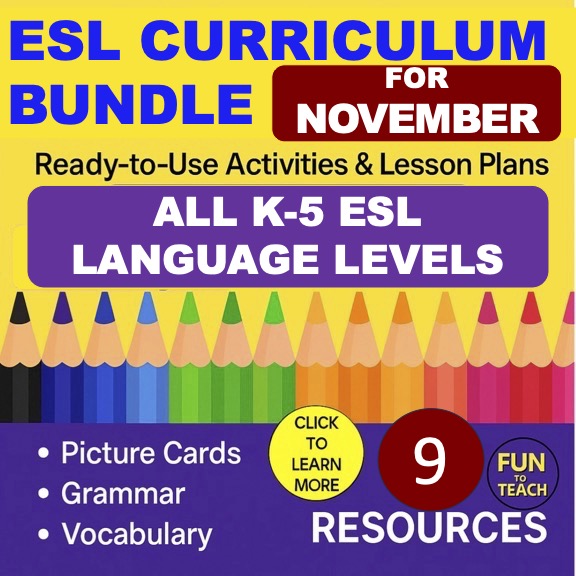
November always seems to come so fast! In August, September, and October we’re getting comfortable with our classroom routines, and the next moment we are looking for November ESL curriculum!
Sound familiar?
By now, we usually have a pretty good idea of what our English learners need. Some students are just beginning to put English words together, while others are ready for longer conversations, challenging vocabulary, and more independent reading and writing.
The challenge is keeping everyone moving forward without spending every evening planning lessons!
Over the years, I’ve learned that a well-organized November ESL Curriculum can make all the difference. With a little planning, meaningful language practice, and a few fun activities, we can keep our students learning without reinventing the wheel.
Here are five ways I like to build English language skills throughout November.
1. Use Storytelling to Build ESL Speaking and Listening Skills
I love a good story lesson! Stories give English learners a reason to listen, ask questions, make predictions, and share their ideas.
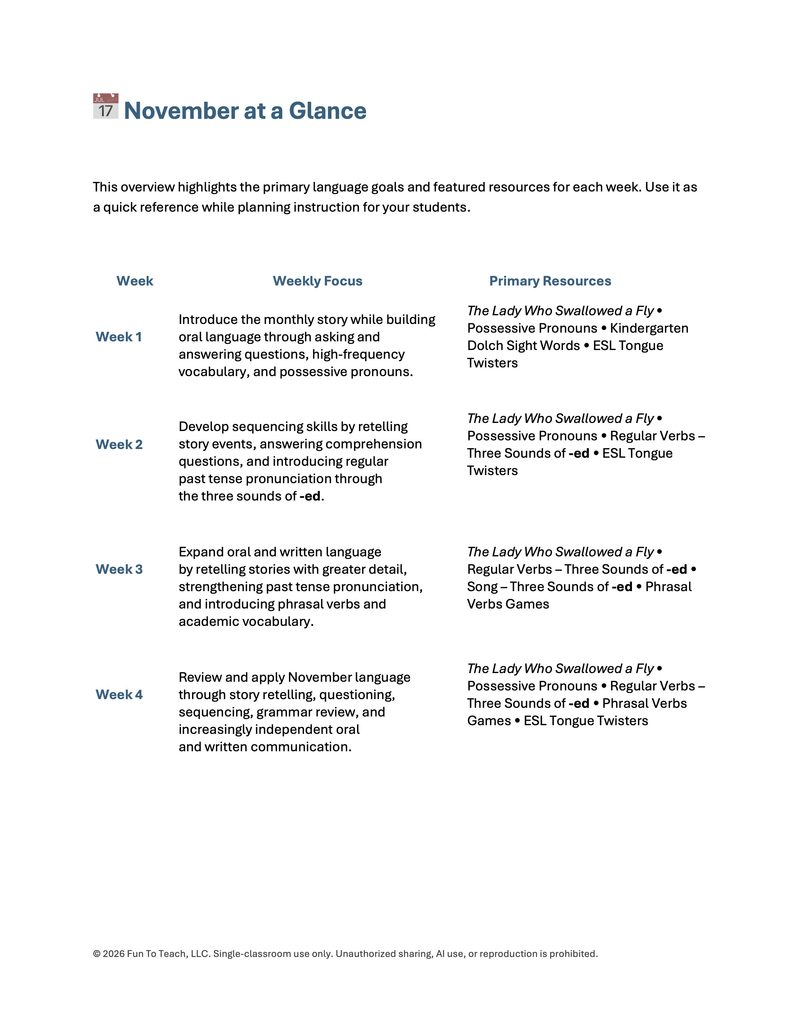
For November, The Lady Who Swallowed a Fly is a fun way to practice asking questions and sequencing events.
Before reading, I introduce vocabulary using pictures and gestures. Then, as we read, I pause to ask questions and encourage students to make predictions.
Afterward, the real fun begins!
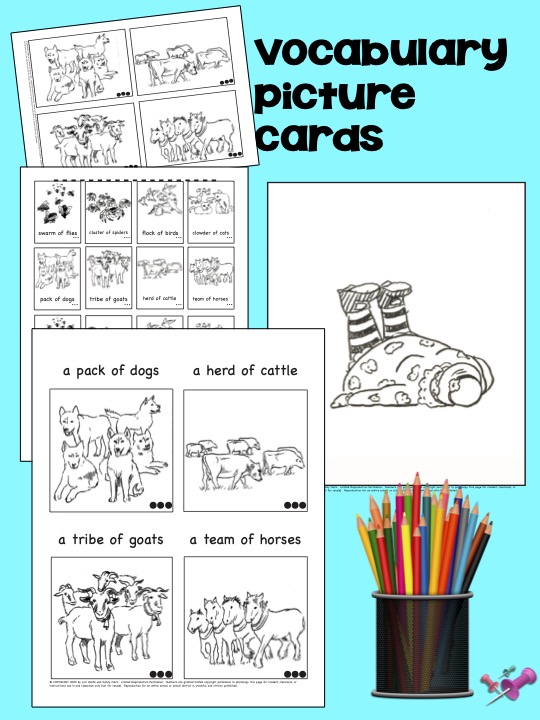
Students can arrange picture cards in order, retell the events with a partner, or use sentence starters to explain what happened.
Try this: Give students four picture cards from the story. Have them put the pictures in order and practice retelling with first, next, then, and finally.
For newcomers, pointing, naming objects, and completing simple sentences are great starting points. Meanwhile, more proficient students can give detailed retellings and explain their thinking.
It’s amazing how much language practice one good story can provide!
2. Make ESL Grammar Lessons Part of Everyday Conversations
Grammar practice doesn’t have to mean another worksheet.
In fact, I find that students learn grammar more naturally when they use it during everyday conversations.
Take possessive pronouns, for example.
Grab a few classroom supplies and start asking questions:
Is this pencil yours or mine?
Whose notebook is this?
Are these markers ours?
Which book belongs to you?
Suddenly, students are practicing mine, yours, and ours in meaningful conversations.
Next, let students take turns asking the questions. You can even turn it into a quick partner game.
The key is giving everyone plenty of opportunities to hear and use the language.
And best of all, you don’t need a lot of preparation to make it happen!
3. Sneak Pronunciation Practice into Your ESL Lesson Plans
Pronunciation is one of those skills that benefits from a little practice every day.
That’s why I like using songs, chants, and tongue twisters as warm-ups. They get students listening carefully, speaking aloud, and having a little fun with English sounds.
For November, I focus on the three sounds of -ed in regular past-tense verbs.
Students can listen to examples, repeat words, and sort them according to the ending sounds.
Then, to reinforce what they’ve learned, I have partners practice saying the words and listening to each other.
A few minutes of focused practice can go a long way.
Plus, tongue twisters always bring a few smiles to the classroom!
4. Build ESL Vocabulary with Games and Word Walls
Vocabulary learning takes repetition. We all know students need to hear and use new words many times before those words become part of their everyday language.
November esl
However, repetition doesn’t have to be boring!
One of my favorite strategies is making vocabulary practice interactive.
Try these quick ideas:
Word Wall Challenge: Ask students to find a word that matches a clue or picture.
Partner Talk: Have students choose a word and use it in a sentence.
Act It Out: Let students demonstrate vocabulary while classmates guess.
Vocabulary Connections: Challenge more advanced students to explain how two words are related.
For students ready for a challenge, I also like introducing phrasal verbs and comparing everyday expressions with more formal vocabulary.
These small activities help students hear, say, read, and use new words in different ways.
Before you know it, they’re building confidence right along with their vocabulary!
5. Differentiate November ESL Lessons Without Starting from Scratch
If you teach English learners at different proficiency levels, you know that one size doesn’t fit all.
But here’s the good news: You don’t always need four completely different lessons.
Instead, I like to begin with a common theme or language goal and adjust the amount of support each group receives.
For example, during a story-retelling lesson:
Newcomers: Identify pictures, name vocabulary, and complete simple sentence starters.
Beginners: Sequence pictures and describe events using short sentences.
Intermediate students: Retell events using complete sentences and transition words.
Early Advanced students: Give detailed retellings, explain ideas, and make connections.
Everyone works toward the same general goal, but the language expectations are different.
This approach helps keep instruction organized while giving students the support they need.
And believe me, anything that makes planning a little easier is worth its weight in gold!
Take the Guesswork Out of November ESL Planning
I know how much time goes into planning meaningful lessons for English learners. Between different proficiency levels, changing schedules, and everything else on our plates, November can get busy in a hurry.
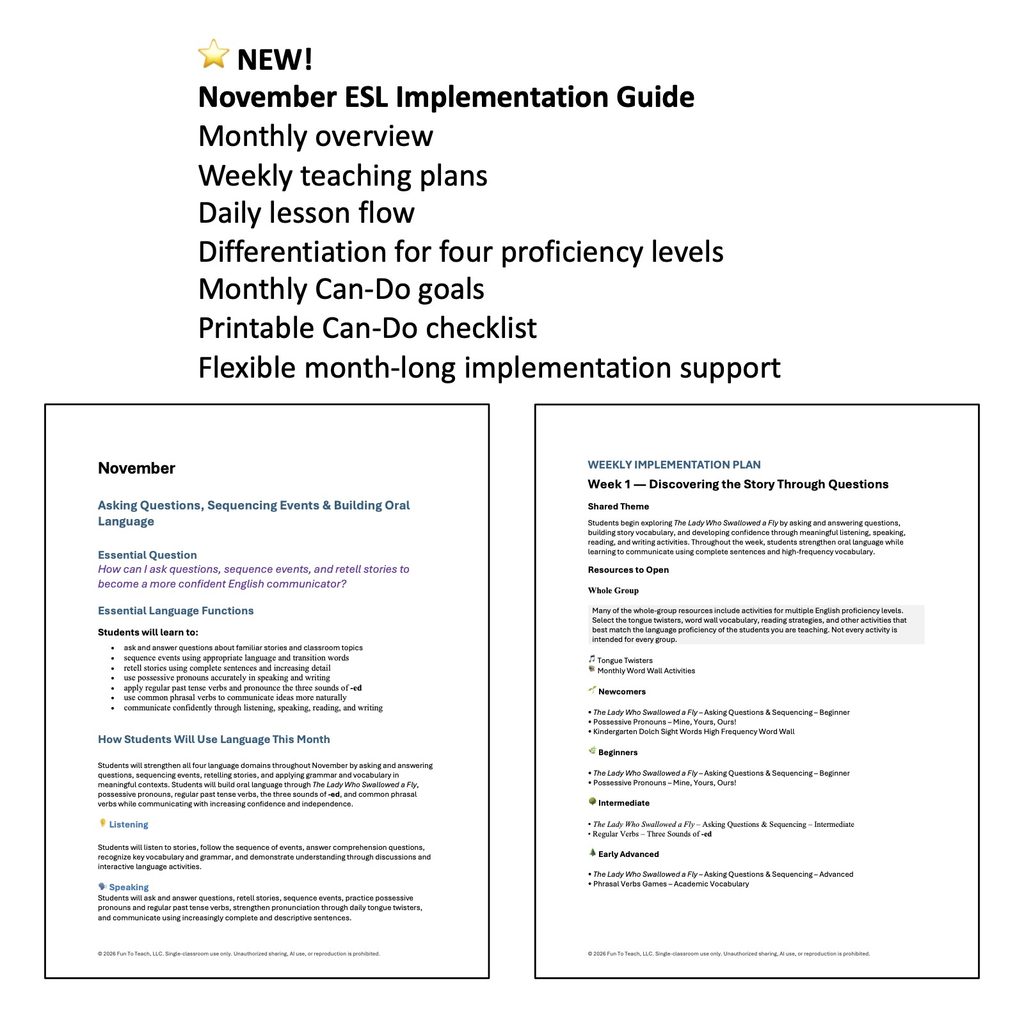
I’ve also added a new November ESL Implementation Guide to help teachers organize instruction throughout the month.
Inside, you’ll find:
Weekly implementation plans and a suggested instructional flow
Language goals for listening, speaking, reading, and writing
Differentiated instruction for four English proficiency levels
Monthly Can-Do Goals and a student Can-Do Checklist
Storytelling, grammar, vocabulary, and pronunciation resources
Flexible pacing that leaves room for your own teaching style
Rather than handing you a rigid script, the guide provides a roadmap. You can choose the lessons, adjust the pacing, and respond to what your students need.
After all, nobody knows your students better than you do!
November may be a short teaching month, but there’s still plenty of room for meaningful language learning.
Whether students are retelling a story, practicing a new grammar skill, or trying out unfamiliar vocabulary, each opportunity to use English helps build confidence.
As always, I encourage you to keep things flexible, celebrate those small successes, and enjoy the conversations happening in your classroom.