Showing posts with label beginning English speakers. Show all posts

Wednesday, May 21, 2025

Tips on Teaching English Newcomers

 ESL Tips

As teachers we know that teaching English as a Second Language (ESL) to newcomers requires lessons at each language domain – speaking, listening, reading, and writing. In this blog post, we’ll explore strategies for teaching ESL newcomers in May, focusing on essential grammar skills needed at the beginning level of English proficiency.

ESL Grammar Skills

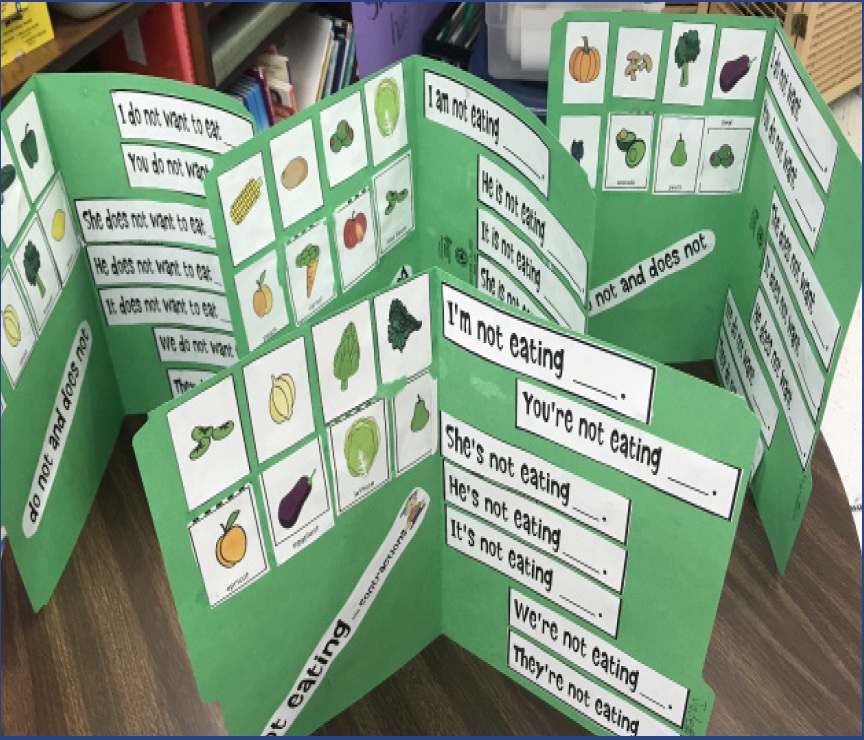
When teaching English Newcomers at the beginning level of English language learning, focus on reinforcing grammar skills through the lens of food-related contexts. Teach basic sentence structures using verbs like want, don’t want, and do not want to express preferences. Introduce present progressive to describe ongoing actions related to food, such as “She is cooking dinner” or “They are tasting the soup.” Incorporate food vocabulary into grammar exercises, asking students to complete sentences with appropriate words. For example, “I _____ to try new recipes” or “She _____ like spicy food.”
Teaching Newcomers

Provide opportunities for practice and reinforcement through interactive activities, role-plays, and games centered around food themes. By integrating grammar instruction with food-related content, you can engage students while strengthening their language skills in a relevant and meaningful context.

ESL Speaking

May provides an opportunity for ESL instructors to engage newcomers in speaking activities reflecting the season’s energy and enthusiasm. Encourage students to express what they want to eat during springtime picnics or barbecues. Role-plays can involve ordering food at a restaurant or sharing preferences for seasonal dishes. Group discussions can explore different foods that students enjoy or don’t enjoy. For example, “What foods do you want to try this spring?” or “Who doesn’t want to eat salads?” Use present progressive to describe ongoing actions, such as “I am enjoying fresh fruit” or “She is trying new recipes.”

Incorporate food vocabulary like fruits, vegetables, meats, and beverages to enrich conversations and expand vocabulary. This approach not only enhances speaking skills but also makes learning enjoyable and relevant to students’ interests.


Listening

Listening comprehension plays a pivotal role in ESL learners’ ability to understand spoken English in various contexts. In May, utilize themed audio materials such as cooking shows, food podcasts, or conversations about dining experiences to engage students. Incorporate listening tasks that involve identifying what people want to eat or don’t want to eat during the spring season. For instance, listen to a dialogue where someone is discussing their favorite foods for a picnic or a barbecue.

Reading

Introduce ESL newcomers to engaging texts that explore the culinary delights of the spring season. Select articles or stories that discuss seasonal foods, cooking traditions, and culinary adventures. Encourage students to read actively, identifying what characters want to eat or don’t want to eat. For example, a passage might describe a character’s craving for fresh fruit or their aversion to spicy dishes.

Use present progressive to describe ongoing actions, such as “They are trying a new recipe” or “He is preparing a salad.” Encourage students to listen for food vocabulary and expressions related to preferences, such as “I want to try sushi” or “She doesn’t want to eat spicy food.” By integrating food-related content into listening activities, students can enhance their comprehension skills while expanding their vocabulary in a meaningful context.

Use present progressive to describe cooking activities, such as “She is preparing a salad” or “They are trying a new recipe.” Scaffold reading activities to include food vocabulary, such as ingredients, cooking methods, and meal preferences. By immersing students in texts that celebrate food culture, you can foster comprehension skills while enriching their vocabulary in a deliciously engaging way.

Writing

In May, inspire ESL newcomers to express their culinary experiences and preferences through writing. Assign writing tasks that invite students to describe what they want to eat or don’t want to eat during the spring season. Encourage them to use present progressive to narrate cooking adventures, such as “I am trying a new recipe” or “We are exploring different cuisines.” Provide prompts that stimulate creativity, such as composing a menu for a springtime picnic or writing a food diary detailing favorite dishes. Encourage the use of food vocabulary and descriptive language to enhance expression. By tapping into their passion for food, students can cultivate their writing skills while savoring the joy of self-expression.

Have fun this May teaching ESL Newcomers. By integrating speaking, listening, reading, and writing activities aligned with springtime themes, instructors can create immersive learning experiences that inspire curiosity, creativity, and cultural appreciation. With a focus on essential grammar skills, ESL educators can empower newcomers to communicate confidently and effectively in English, paving the way for continued growth and success in their language acquisition journey.  Check out my ESL Bundle for May which includes resources for English Newcomers and all ESL levels.

Looking for time-saving tips and tricks for teaching math and ESL? Sign up for my email newsletter to get free teaching resources and helpful strategies right to your inbox! Click here to sign up.

Happy Teaching!
Let’s Teach! Lori
ESL Year-long Bundle

Wednesday, December 18, 2024

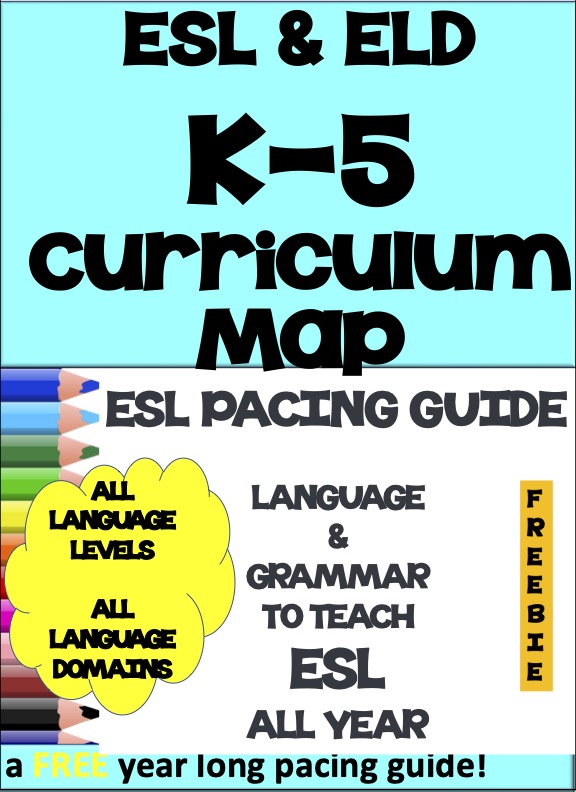
✅ 🤸‍♀️ FREE ESL YEARLONG PACING GUIDE ✅ 🤸‍♀️

 – a year-long pacing guide!

ESL Pacing Guide

Planning for the year can be overwhelming. Many of you have been asking me for my ESL/ELD curriculum map so here it is!

This K-5 ESL Curriculum Map, Lesson Plans and Pacing guide is a FREE year-long ELL tool you can use to plan your ESL lessons & activities for all your English language levels.

This free yearlong ESL-ELD curriculum map is broken down by week which will help you plan your year for all three ELL language levels listed below:

  • Beginner/Early Intermediate
  • Intermediate
  • Early Advanced/Advanced

****This K-5 ESL Curriculum, Lesson Plans and Pacing guide free sample is from our ESL yearlong bundle (HERE) with over 2600 pages that will take you through the year – month by month for English Newcomers to Early Advanced speakers.

Firstly, Planning ESL curriculum for the year can be overwhelming. If you are looking for an ESL curriculum map to guide you through the whole year, this is it! Additionally, this freebie includes a blank planner for you to create your own!

This year-long ESL/ELD curriculum map, broken down by week, will help you plan your year for all 3 language levels.

✅ Beginner/early intermediate
📚 Intermediate
✅ Early Advanced/Advanced

In addition, each month, under each language level there are language components that I teach during that month. You more than likely have your own resources, activities, and curriculum to teach these components.

♥If I have a product that contains all or parts of the language I teach during that month I have listed it. All resource images are clickable links for your convenience. Just click on the image you want to see and it will take you to my TPT store.♥

Furthermore, each month has a combination of ELD units and/or grammar components essential for English learners. Again choose some or all of what I have here. Feel free to mix it up to suit you!

Click Here to download from TPT!

Finally, every classroom is different! Every teacher teaches differently, and I tried to create this year’s curriculum map with many different types of classrooms and teachers in mind. I know you may need to tweak this to the needs of your students, classroom, and administration. That’s OK! For example, March is a testing month for me. If you need to switch months around to meet your testing time, that is just fine. Do what is best for your students in your classroom.

There is even a column for holidays, which you can use or not use, your choice. How awesome is that people? I mean the whole year is planned out for you.

Click here to download!

Happy Teaching!

Sunday, December 15, 2024

🎁🎁 Special Offer Alert: ESL Yearlong Curriculum on Sale for $99.00 - Act Quickly! 🏃🏻‍♀️


Here is a gift that will keep on giving ALL school year on!
 
We understand the importance of providing quality resources to support your teaching, and we're excited to share a limited-time offer with you.
 
 
This comprehensive resource is specifically designed to cater to the needs of English Language Learners (ELL) and is filled with engaging activities that enhance language development.
 
Block 3rd
 
🌟 ESL Yearlong Curriculum Highlights:
  • Comprehensive Content: Thoughtfully designed lesson plans covering various language skills.
  • Versatile Activities: Interactive exercises to keep your students engaged and motivated.
  • Adaptable Resources: Easily customize the curriculum to suit the unique needs of your students.
 
Don't miss out on this opportunity to enrich your ESL teaching toolkit and make a lasting impact on your students' language development journey.


Only a few hours left to get our ESL Yearlong Curriculum for just $99.00!
 
Block 7th
 
$165 bundle price $99
Block 9th - countdown

Wednesday, September 4, 2024

Teaching Reading to English Learners 📚 🤸‍♀️


Hello teachers. 

 Teaching reading to ELs


Recently a teacher reached out and asked me about English Language Learners and teaching Reading to ELs. I thought my response to her would be interesting to others so here it is as a blog post!


We know that ESL instruction is an important part when we are trying to teach reading to ELs. I admit that it takes a bit of patience and creativity, but there are some simple tricks that work wonders.  


It’s important to begin by introducing ESL learners to an all-encompassing approach to starting reading: the reading domain. This domain encompasses preparing ESL students, in listening comprehension, and written and oral skills. 


In my district we believe that teaching Reading to ELs needs to be a team effort!  As the ESL teacher I worked with the Title I reading specialist and the classroom teachers to achieve this complex task.  We recognized that it is the ESL teachers main responsibility to teach ELs English and raise their English proficiency.  This doesn’t always correlate with what is happening in reading.  We went to work to determine who does what. This is what we came up with and I think it works well!


Teaching Reading to ELs – Assessment of Prior Knowledge – ESL Teacher and Reading Specialist

  • Understand the students’ language proficiency levels and prior exposure to reading in English.
  • Identify any specific challenges or strengths in phonemic awareness, vocabulary, and comprehension.


Building Phonemic Awareness – Depending on grade level – ESL TeacherReading Specialist and Classroom Teacher for early grades

  • Start with phonemic awareness activities, focusing on sounds and their correspondence to letters (phonics).
  • Use games, songs, and activities that emphasize rhyming, blending, and segmenting sounds.

Introducing Basic Vocabulary – Reading Specialist, and Classroom Teacher for early grades supported by ESL Teacher

  • Teach essential sight words and high-frequency words that are foundational to reading.
  • Use visual aids, gestures, and realia to reinforce meaning and context.

Teaching Reading to ELs – Reading Aloud- Classroom Teacher

  • Model fluent reading and correct pronunciation through read-aloud sessions.
  • Use engaging and culturally relevant texts to maintain interest.


Phonics Instruction- Reading Specialist, and Classroom Teacher for early grades

  • Teach phonics rules systematically, starting with simple consonant-vowel-consonant (CVC) words and progressing to more complex patterns.
  • Practice decoding skills through word families and word sorts.


Teaching Reading to ELs Vocabulary Development – ESL Teacher Reading Specialist, and Classroom Teacher

  • Expand vocabulary through context-based learning and thematic units.
  • Encourage students to use new words in speaking and writing activities.

Guided Reading and Scaffolded Practice – Reading Specialist, and Classroom Teacher

reading strategies for ELs
  • Provide guided reading sessions where students read texts at their instructional level with teacher support.
  • Teaching Reading Strategies
  • Scaffold comprehension strategies such as predicting, questioning, summarizing, and making connections.


Independent Reading – Classroom Teacher supported by Reading Specialist for materials

guided reading


  • Foster a love for reading by providing access to books at appropriate reading levels.
  • Encourage independent reading time and provide opportunities for students to choose their own books.


Writing Practice – Classroom Teacher

  • Integrate reading and writing by having students write about what they read.
  • Teach writing conventions such as sentence structure, punctuation, and grammar in context.

Assessment and Feedback – Classroom Teacher and Reading Specialist

  • Use ongoing assessments such as running records, comprehension checks, and fluency monitoring to track progress.
  • Provide constructive feedback and celebrate achievements to motivate continued learning.

Home-School Connection – Classroom Teacher

  • Involve parents and guardians by sharing strategies for supporting reading at home.
  • Provide resources and recommendations for bilingual books or audio materials.

Differentiation and Individualized Support – ESL TeacherReading Specialist, and Classroom Teacher

  • Differentiate instruction based on students’ learning styles, interests, and language proficiency levels.
  • Offer additional support through small group interventions or one-on-one sessions as needed.

Cultural Sensitivity and Inclusivity – ESL Teacher Reading Specialist, and Classroom Teacher

  • Incorporate diverse texts and perspectives that reflect students’ backgrounds and experiences.
  • Create a supportive classroom environment where students feel valued and encouraged to take risks in their language learning journey.

By following these steps, educators can create a comprehensive and supportive environment for elementary ELLs to develop their reading skills effectively. Adjustments should be made based on individual student needs and progress throughout the learning process.


Leave your comment below!  We would love to hear from you!

Happy Teaching!
Let’s Teach!
Lori

Looking for time-saving tips and tricks for teaching math and ESL? Sign up for my email newsletter to get free teaching resources and helpful strategies right to your inbox! Click here to sign up.


ESL Mega Yearlong Bundle

ESL Year-Long – ELL Lesson Plans – ESL Curriculum – English Newcomer Activities


ESL Advanced Level Thematic BUNDLE - ESL Curriculum - ESL

ESL Advanced Level Thematic BUNDLE – ESL Curriculum – ESL vocabulary – ESL

June – ESL Lesson Plans Bundle – ESL Curriculum – Kindergarten thru 6th


ESL Curriculum for Intermediate ELLs - ESL Vocabulary - ES

ESL Curriculum for Intermediate ELLs – ESL Vocabulary – ESL Lesson Plans