If you’re anything like me, I find the weeks before school starts are exciting…and a little demanding for ESL teachers.
There are class lists to organize, ESL schedules to figure out, materials to prepare, and lesson plans to think about. Add in new students who may arrive after school begins, and it’s easy to wonder where to start.
The good news is that you don’t have to have the entire year planned before the first day of school.
What you do need is a plan.
Over the years, I’ve learned that having a roadmap for the year makes everything else fall into place. It doesn’t mean every lesson is planned or that you can’t adjust as your students’ needs change. It simply means you know where you’re headed.
Start with the ESL Big Picture
Before I worry about tomorrow’s lesson, I think about the entire school year.
What do I want my students to be able to do by the end of the year?
What vocabulary should they learn first?
Which grammar skills will they need as they become more confident English learners?
How will they practice listening, speaking, reading, and writing every month?
When you start with the big picture, daily planning becomes much easier because every lesson has a purpose.
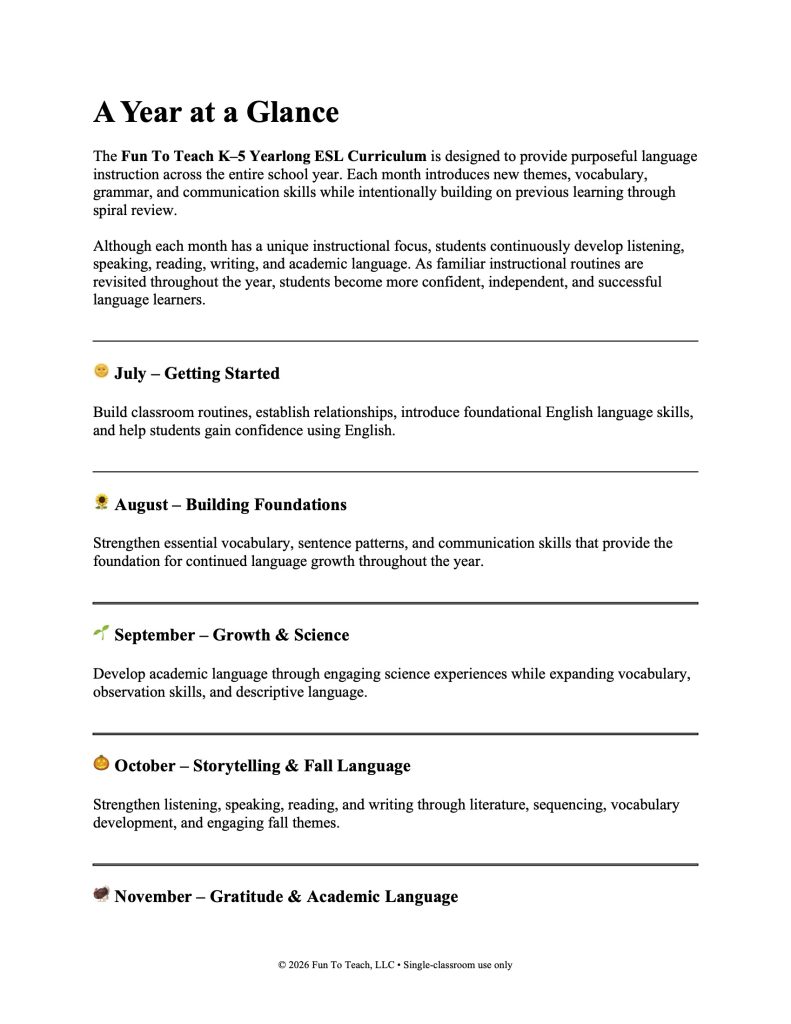
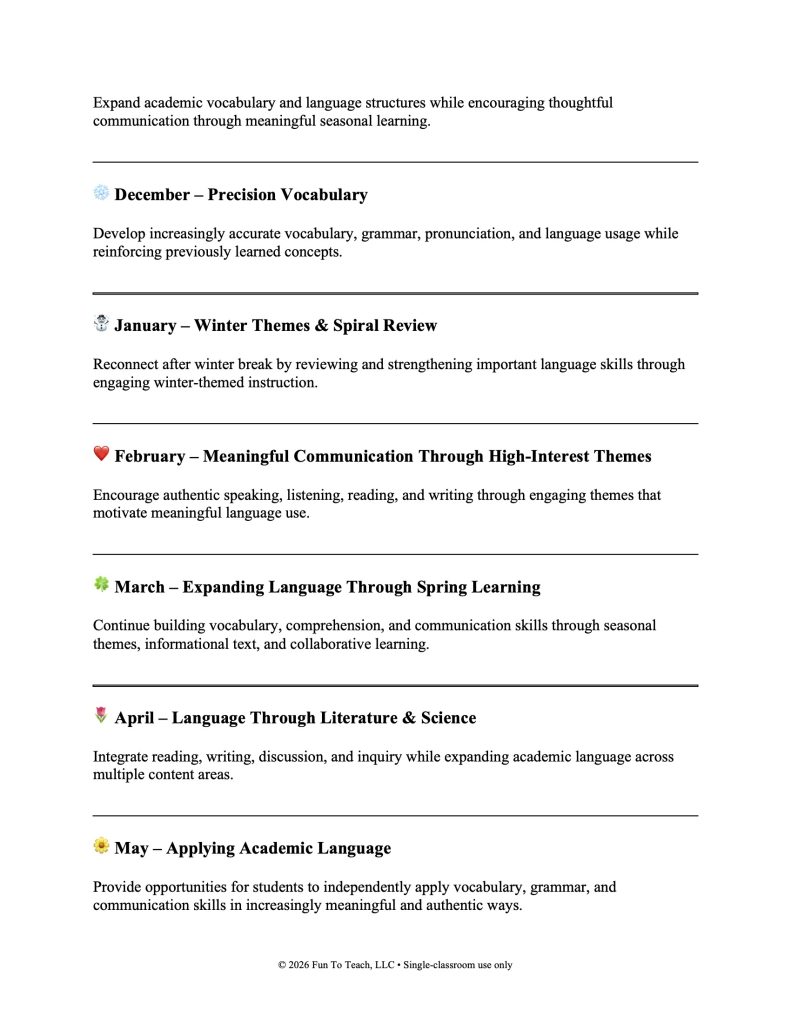
Think in Months, Not Days
One thing that has saved me countless hours over the years is planning by month instead of trying to plan one day at a time.
Each month has its own language focus, vocabulary, grammar, and engaging theme. As the months go by, students continue building on what they’ve already learned instead of starting over with something completely new.
This also makes it much easier to review important skills throughout the year. English learners need lots of opportunities to hear, practice, and use new language before it becomes part of their everyday vocabulary.
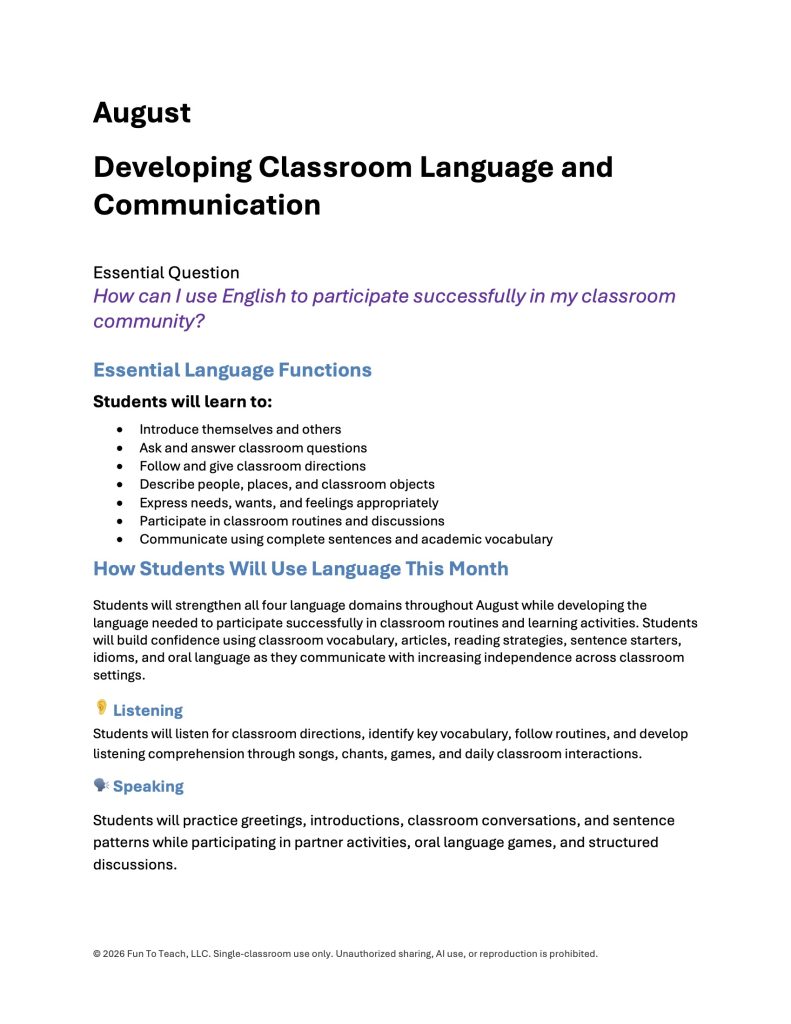
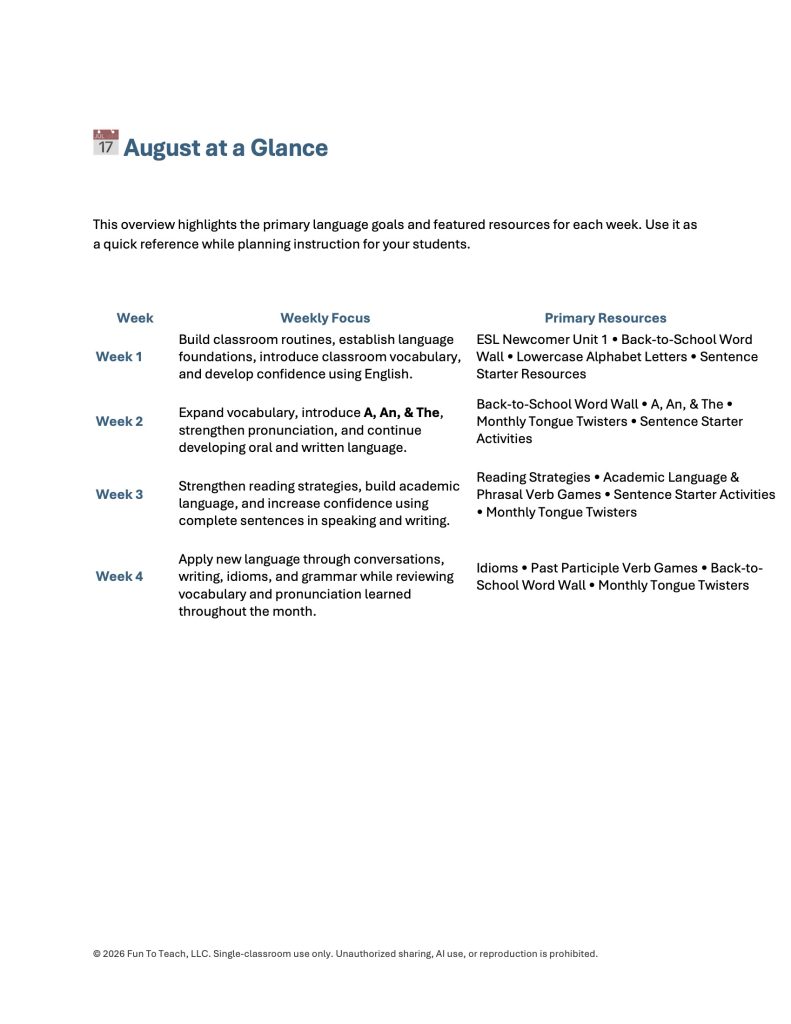
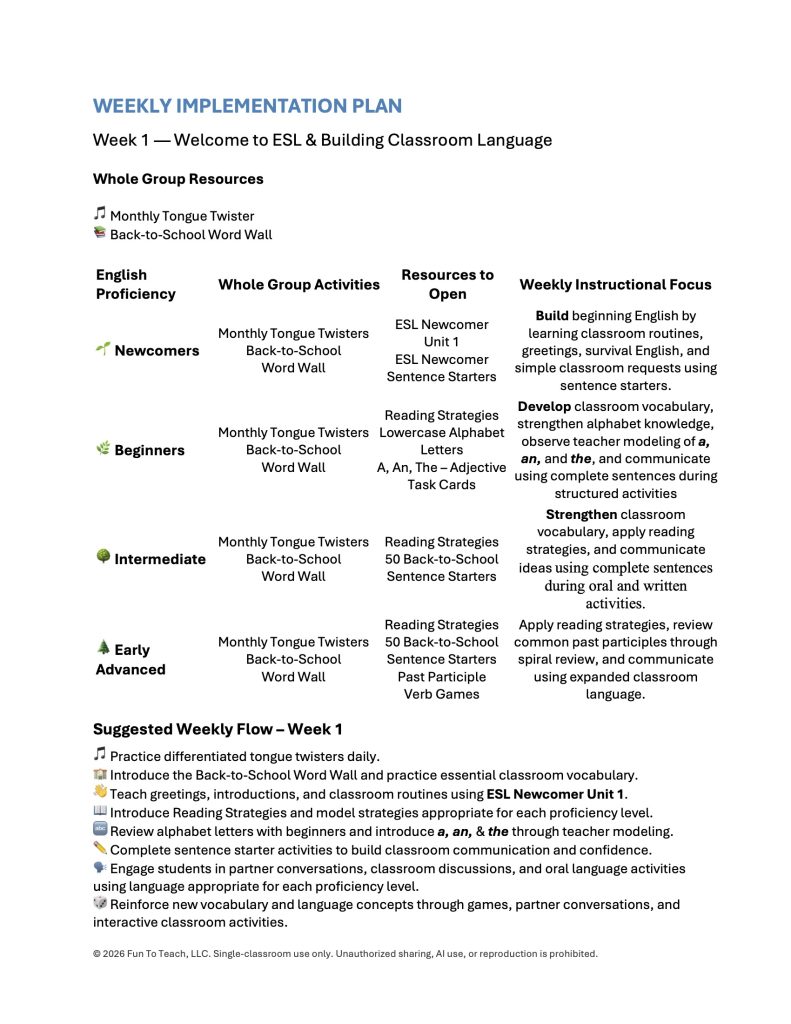
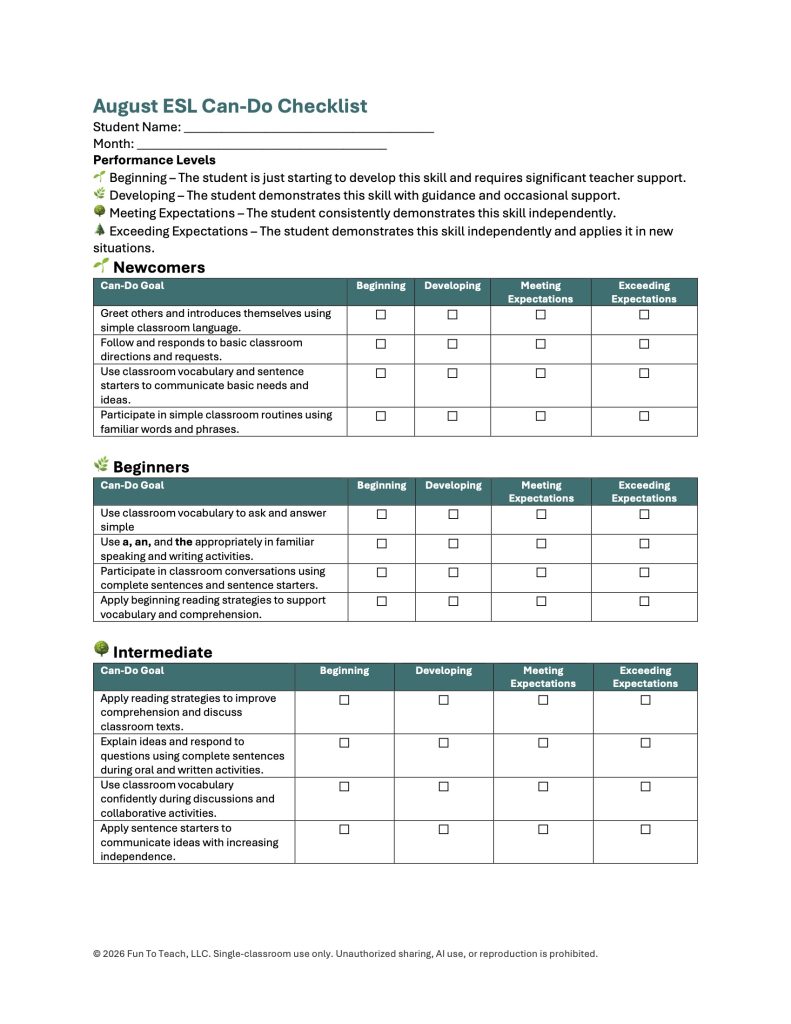
One of the biggest time-savers I’ve discovered is having a plan for the entire school year.
That doesn’t mean every lesson has to be planned before school starts. It simply means you have a roadmap. When you know where you’re headed, it’s much easier to make daily decisions, adjust for new students, and keep language instruction moving forward.
Here’s what that looks like in practice.
Why I Stopped Planning ESL Week by Week
| Planning with a Complete Yearlong Curriculum | Planning One Lesson at a Time |
|---|---|
| ✅ You have a clear roadmap for the entire school year. | ❌ You spend time deciding what to teach next every week. |
| ✅ Vocabulary, grammar, and language skills build naturally from month to month. | ❌ Lessons often don’t connect, making it harder for students to retain new language. |
| ✅ Spiral review is already built into the curriculum, so students revisit important skills throughout the year. | ❌ Important concepts can easily be forgotten if they aren’t intentionally reviewed. |
| ✅ Resources are organized by month and proficiency level, making planning quick and manageable. | ❌ Materials come from different places and often need to be reorganized or adapted. |
| ✅ Newcomers and mixed-proficiency students are supported with differentiated resources. | ❌ Teachers often end up creating multiple versions of the same lesson from scratch. |
| ✅ More time is spent teaching students. | ❌ More time is spent searching, printing, and planning. |
When I first started teaching, I spent far too much time searching for activities, printing worksheets, and trying to figure out what
Remember the Four ESL Language Domains
It’s easy to spend a lot of time teaching vocabulary, but vocabulary alone isn’t enough.
Every month, I want students to have opportunities to:
- listen to English in meaningful ways
- speak with confidence
- read language they can understand
- write using the new vocabulary and grammar they’ve learned
When these four language domains work together, students make much stronger progress.
Your Students Won’t All Be at the Same Level
If you’ve taught ESL for very long, you already know this!
One student may have arrived yesterday and knows only a few words in English.
Another may understand almost everything but be afraid to speak.
Another may be reading chapter books.
Planning for mixed-proficiency classrooms can feel overwhelming, but it doesn’t have to mean creating four different lesson plans every day.
Instead, I plan one language objective and provide different levels of support so every student can participate successfully.
That approach has made teaching much more manageable and much more enjoyable.
Don’t Be Afraid of Repetition
Sometimes teachers worry they’re reviewing too much.
I’ve found the opposite to be true.
English learners benefit from seeing vocabulary and grammar over and over again in different ways.
That’s why I believe so strongly in spiral review.
Students hear the language.
They practice it.
They use it.
Then they come back to it again in a new context.
Every review builds confidence.
Keep the First Weeks Simple
The first month of school doesn’t have to cover everything.
Instead, focus on helping students feel successful.
Teach classroom routines.
Practice greetings.
Introduce survival vocabulary.
Help students learn how to ask for help.
Build confidence from the very beginning.
When students feel comfortable taking risks, language growth follows much more naturally.
Give Yourself Permission to Simplify
Let’s face it.
Most ESL teachers wear a lot of hats.
We’re planning lessons, assessing students, collaborating with classroom teachers, attending meetings, supporting families, and often serving students across multiple grade levels.
Trying to create every lesson from scratch simply isn’t realistic.
One of the best decisions I ever made was creating a system that organized the entire school year. Instead of wondering what to teach next, I could focus my energy on my students.
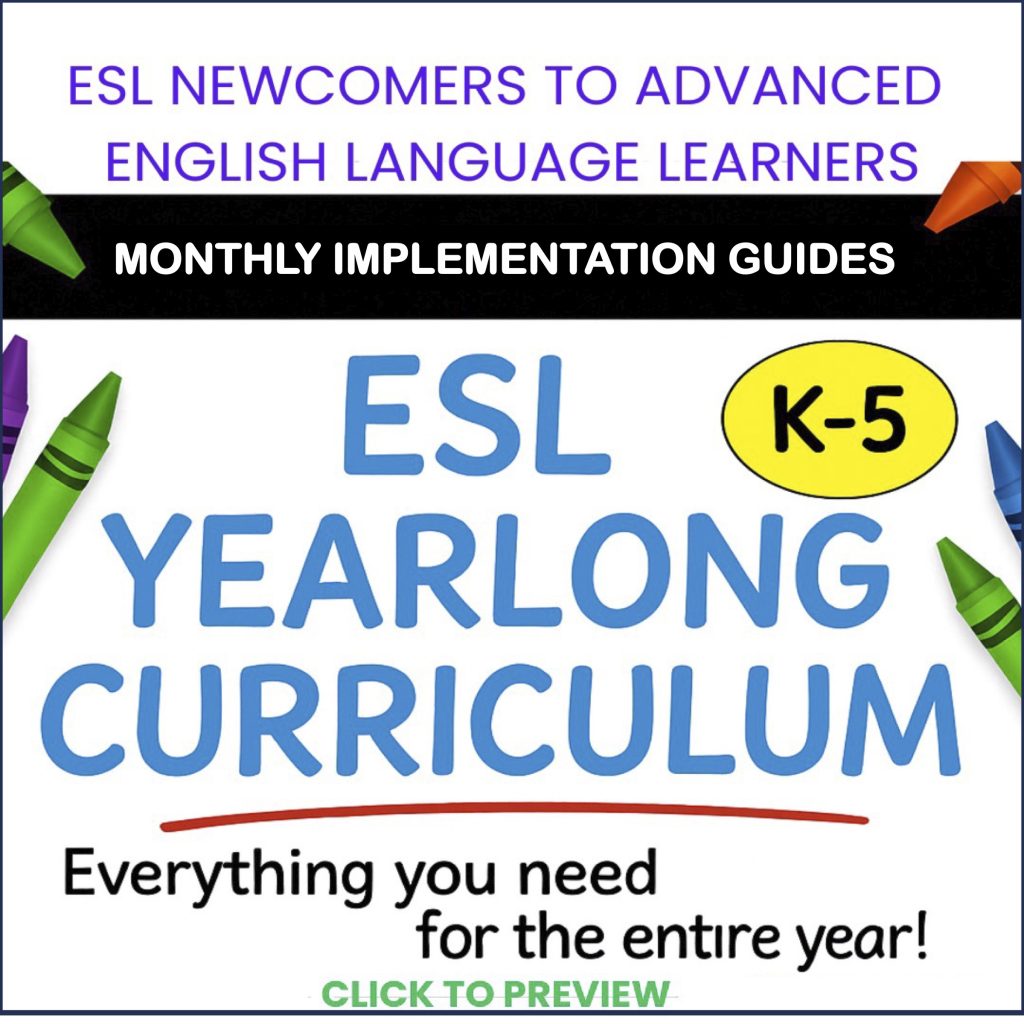
That’s exactly why I created my ESL Yearlong Curriculum | K–5 Lesson Plans.
It isn’t a scripted program that tells you exactly what to say each day. Instead, it provides a flexible framework with monthly implementation guides, lesson plans, differentiated resources for four proficiency levels, vocabulary, grammar, pronunciation, and engaging thematic units.
You still make the instructional decisions that are best for your students. The curriculum simply takes the stress out of planning.
If you’d like to see how it’s organized, you can explore the curriculum further to get a feel for how everything works together.
Final Thoughts
Every school year brings new students, new challenges, and new opportunities.
No matter how experienced we are, there’s always a little uncertainty at the beginning of the year.
But having a thoughtful plan makes all the difference.
When you know where you’re headed, you can spend less time worrying about what to teach next and more time doing what you love—helping your English learners grow in confidence every single day.
I hope you have a wonderful start to your school year! a plan.


No comments:
Post a Comment