Have you ever noticed that the first few weeks of school seem to set the tone for the entire year? This is where ESL classroom routines come in.
If you’re anything like me, I want to jump right into teaching vocabulary, grammar, and all the fun language activities I’ve been planning. But over the years, I’ve learned that spending a little extra time teaching classroom routines at the beginning of the year pays off all year long.
As the saying goes, “An ounce of prevention is worth a pound of cure.” It’s an old proverb often credited to Benjamin Franklin, and it simply means that spending a little time preventing problems now can save a lot of time and frustration later.
That couldn’t be more true in an elementary ESL classroom.
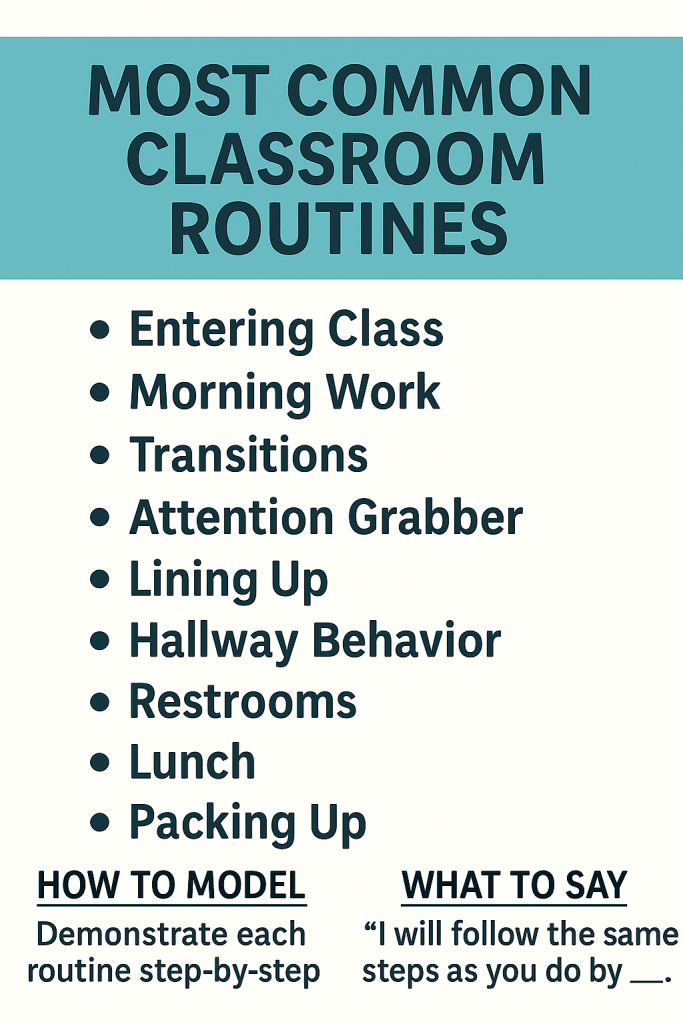
Whether you’re teaching newcomers or students at several different proficiency levels, consistent routines help everyone know what to expect. They reduce confusion, build confidence, and give students more opportunities to use English in meaningful ways.
Here are the routines I teach every year.
1. ESL classroom routines: Entering the Classroom
The first few minutes of class set the tone for the lesson.
Teach students exactly what to do when they arrive.
Should they greet you?
Sit in a certain spot?
Get out a notebook?
Begin a warm-up activity?
When students know the routine, you can start teaching instead of giving directions every class.
2. Asking for Help
English learners shouldn’t have to guess how to ask for help.
Teach and practice simple phrases like:
- I need help?
- I don’t understand.
- Can you say that again?
- Can you help me, please?
Then celebrate every time students use them independently.
Real communication starts here.
3. ESL classroom routines: Getting Classroom Supplies
Instead of answering twenty questions about pencils, scissors, and glue, teach students exactly how to ask for what they need.
Practice phrases like:
- May I have a pencil?
- May I use the markers?
- I need scissors.
These little routines save surprising amounts of instructional time.
4. ESL classroom routines: Partner Talk
One of the best ways to build speaking confidence is through structured partner activities.
Don’t assume students know how to work with a partner.
Model:
- Who speaks first
- How long to talk
- How to listen
- How to switch turns
Sentence frames make partner conversations much less intimidating for English learners.
5. ESL classroom routines: Transitioning Between Activities
Moving from one activity to another can quickly become chaotic.
Use consistent signals every time.
Whether it’s a countdown, a chime, a song, or a familiar phrase, students will learn exactly what’s expected.
The fewer words you need, the smoother your lesson will be.
6. Using Sentence Frames
Never assume students know how to answer in complete sentences.
Give them the language they need.
For example:
- I see…
- I like…
- My favorite is…
- I think…
- I need…
Sentence frames help students participate successfully while building confidence.
7. ESL classroom routines: Practicing Vocabulary Every Day
Vocabulary grows through repetition.
Instead of teaching new words once and moving on, find simple ways to review them every day.
Try:
- quick picture card reviews
- partner quizzes
- word wall games
- acting out vocabulary
- quick oral review
Those few minutes add up over the course of the year.
8. Cleaning Up
Cleaning up may not sound like language instruction, but it absolutely can be.
Teach phrases such as:
- Put it away.
- Throw it away.
- Line up.
- Push in your chair.
- Clean your table.
Students learn useful English while helping the classroom run smoothly.
9. ESL classroom routines: Ending Every Lesson the Same Way
A predictable ending helps students know they’ve been successful.
Review:
- today’s vocabulary
- one new sentence
- one thing they learned
Even a two-minute review strengthens language retention.
10. Celebrating Success
This might be the most important routine of all.
Celebrate effort.
Celebrate risk-taking.
Celebrate trying.
Celebrate using English.
A smile, a high-five, or a few encouraging words can go a long way toward helping students feel confident enough to keep practicing.
Why Routines Matter
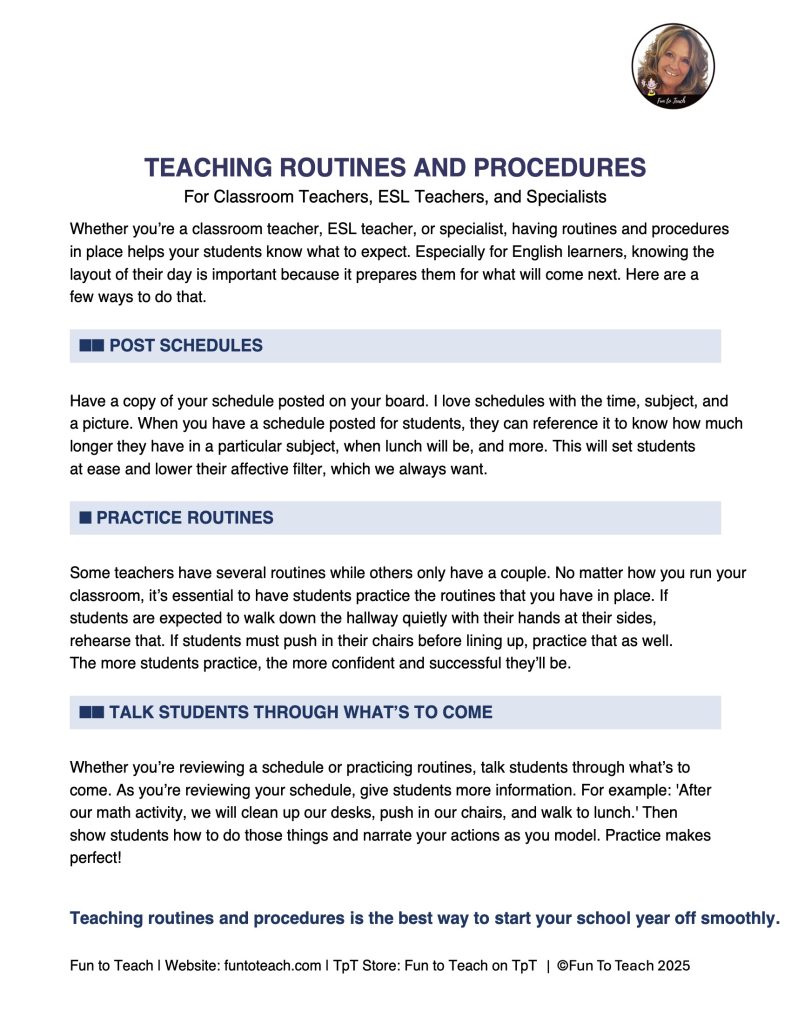
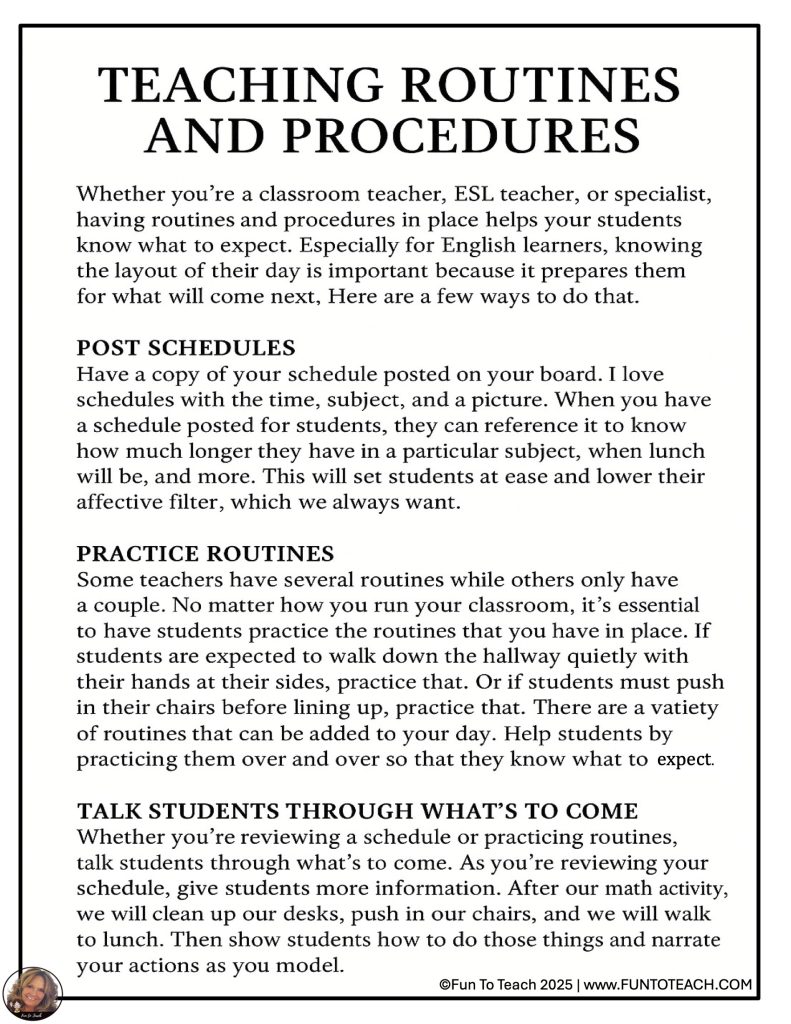
Teaching routines may not feel as exciting as introducing a new game or activity, but they’re one of the best investments you can make at the beginning of the school year.
When students know what to expect, they spend less time wondering what to do and more time learning English.
That’s a win for everyone.
Looking for Ready-to-Teach ESL Lessons?
Over the years, I’ve built these routines into my ESL Yearlong Curriculum | K–5 Lesson Plans so teachers don’t have to start from scratch every month. The monthly implementation guides, vocabulary activities, sentence frames, games, and differentiated lessons all work together to create consistent routines that help English learners grow in confidence throughout the year.
If you’re just getting started, you might also enjoy exploring my monthly ESL curriculum bundles.
Because when the planning is done, the teaching is yours.
Happy teaching!
– Lori


No comments:
Post a Comment