Showing posts with label Language Arts Lessons. Show all posts

Thursday, January 25, 2018

Saturday, August 13, 2016

LANGUAGE ARTS - "Scooping Words with One Closed Syllable & One Vowel-Consonant-e Syllable"

by Reading on Strawberry Lane 

Grades 1-3


Scooping a word is the same as dividing the word into syllables. Syllables can be divided by saying them orally or by using a pencil and paper. If we orally divide a word into syllables, we usually clap the word out. For example, if we orally divided the syllables of dislike, we would clap out ‘dis’ and ‘like,’ and that would be two claps. If we divided the syllables on paper, we would place a slash between the ‘s’ and ‘l’ in the word ‘dis/like.’

So rather that placing a slash, there is another way to show the number of syllables in a word, and that is to scoop the syllables. This is how that would look: d i s I I k e. Not dividing the word with a slash avoids the look of an extra letter in the word, and it also avoids the idea of students thinking the word has only one syllable since there is just one slash. With the idea of scooping with the finger or with a pencil, students can feel and see the scoops which in turn matches the number of syllables.

This packet contains 64 task cards that allow students to practice scooping words with one closed syllable and one vowel-consonant-e syllable.

Saturday, July 30, 2016

LANGUAGE ARTS - "Scooping Words with One Closed Syllable & One Vowel-Consonant-e Syllable"

by Reading on Strawberry Lane 

Grades 1-3


Scooping a word is the same as dividing the word into syllables. Syllables can be divided by saying them orally or by using a pencil and paper. If we orally divide a word into syllables, we usually clap the word out. For example, if we orally divided the syllables of dislike, we would clap out ‘dis’ and ‘like,’ and that would be two claps. If we divided the syllables on paper, we would place a slash between the ‘s’ and ‘l’ in the word ‘dis/like.’

So rather that placing a slash, there is another way to show the number of syllables in a word, and that is to scoop the syllables. This is how that would look: d i s I I k e. Not dividing the word with a slash avoids the look of an extra letter in the word, and it also avoids the idea of students thinking the word has only one syllable since there is just one slash. With the idea of scooping with the finger or with a pencil, students can feel and see the scoops which in turn matches the number of syllables.

This packet contains 64 task cards that allow students to practice scooping words with one closed syllable and one vowel-consonant-e syllable.

Saturday, July 9, 2016

LANGUAGE ARTS - "Scooping Words with One Closed Syllable & One Vowel-Consonant-e Syllable"

by Reading on Strawberry Lane 

Grades 1-3


Scooping a word is the same as dividing the word into syllables. Syllables can be divided by saying them orally or by using a pencil and paper. If we orally divide a word into syllables, we usually clap the word out. For example, if we orally divided the syllables of dislike, we would clap out ‘dis’ and ‘like,’ and that would be two claps. If we divided the syllables on paper, we would place a slash between the ‘s’ and ‘l’ in the word ‘dis/like.’

So rather that placing a slash, there is another way to show the number of syllables in a word, and that is to scoop the syllables. This is how that would look: d i s I I k e. Not dividing the word with a slash avoids the look of an extra letter in the word, and it also avoids the idea of students thinking the word has only one syllable since there is just one slash. With the idea of scooping with the finger or with a pencil, students can feel and see the scoops which in turn matches the number of syllables.

This packet contains 64 task cards that allow students to practice scooping words with one closed syllable and one vowel-consonant-e syllable.

Saturday, July 2, 2016

LANGUAGE ARTS - "Scooping Words With One Closed Syllable & One Vowel-Consonant-e Syllable"

by Reading on Strawberry Lane 

Grades 1-3


Scooping a word is the same as dividing the word into syllables. Syllables can be divided by saying them orally or by using a pencil and paper. If we orally divide a word into syllables, we usually clap the word out. For example, if we orally divided the syllables of dislike, we would clap out ‘dis’ and ‘like,’ and that would be two claps. If we divided the syllables on paper, we would place a slash between the ‘s’ and ‘l’ in the word ‘dis/like.’

So rather that placing a slash, there is another way to show the number of syllables in a word, and that is to scoop the syllables. This is how that would look: d i s I I k e. Not dividing the word with a slash avoids the look of an extra letter in the word, and it also avoids the idea of students thinking the word has only one syllable since there is just one slash. With the idea of scooping with the finger or with a pencil, students can feel and see the scoops which in turn matches the number of syllables.

This packet contains 64 task cards that allow students to practice scooping words with one closed syllable and one vowel-consonant-e syllable.

Thursday, June 23, 2016

LANGUAGE ARTS - Fun Early Literacy Review: Canada Themed No-Prep Printables (and kids' thoughts on Canada Day)!

Blog Post - Fun, NoPrep Canada Literacy Activities and Canada Day conversations with the little people! 
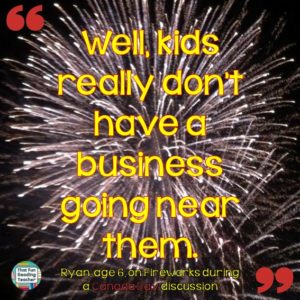
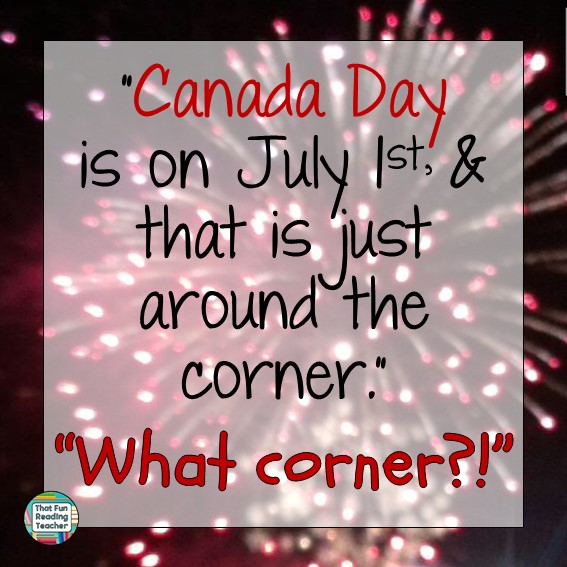
 Hello my friends! Here in Ontario, we have one week left of classes. At the end of the school year, I like to take some time to discuss Canada Day with my students. For the age group I teach, their perceptions of Canada Days past can be quite entertaining:

That Fun Reading Teacher's student - funny quote on Fireworks #kids say the #darndest things! That Fun Reading Teacher's student's view of #Canada's beginning

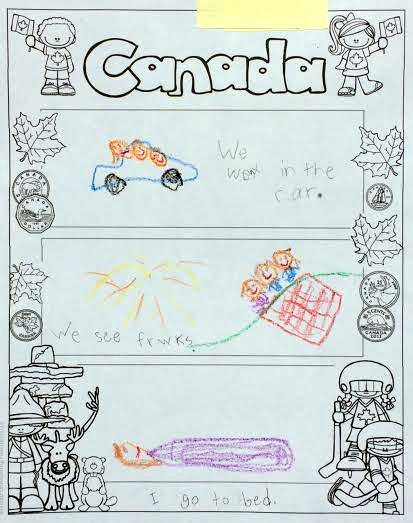
Canada Day is clearly a memorable experience for even our youngest students, whether it be of fireworks, time with family or friends during the day. Whether we are retelling a story that we have read together, creating our own adventure, or discussing a personal experience, there is a logical sequence of events and words that match: first, then, finally (or whichever vocabulary you have decided to use!) (For a post about using the 3 part graphic organizer with young students, and a freebie, click here!) Here is a fun Canada Day story that started orally with a reading buddy who helped sort out the three basic story parts before the pictures were drawn (and was duly thanked!)
                       Canada Read and Write and More - Graphic Organizer

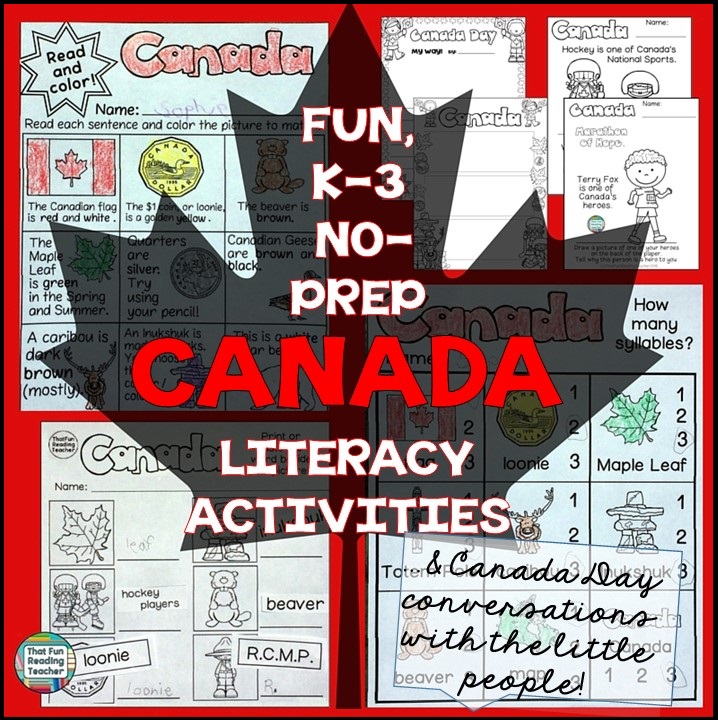
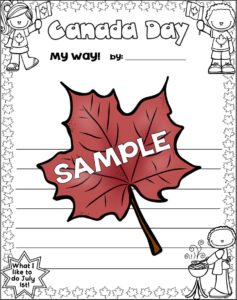
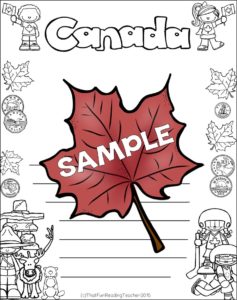
These no-prep printables come from Canada Read and Write and More, the first set of what I have started to develop as a series. Here is the Canada themed and Canada Day writing paper:

Canada Day Read and Write and More writing paper sample Canada Read and Write and More Writing Paper sample

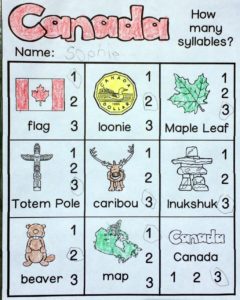
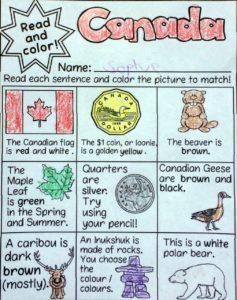
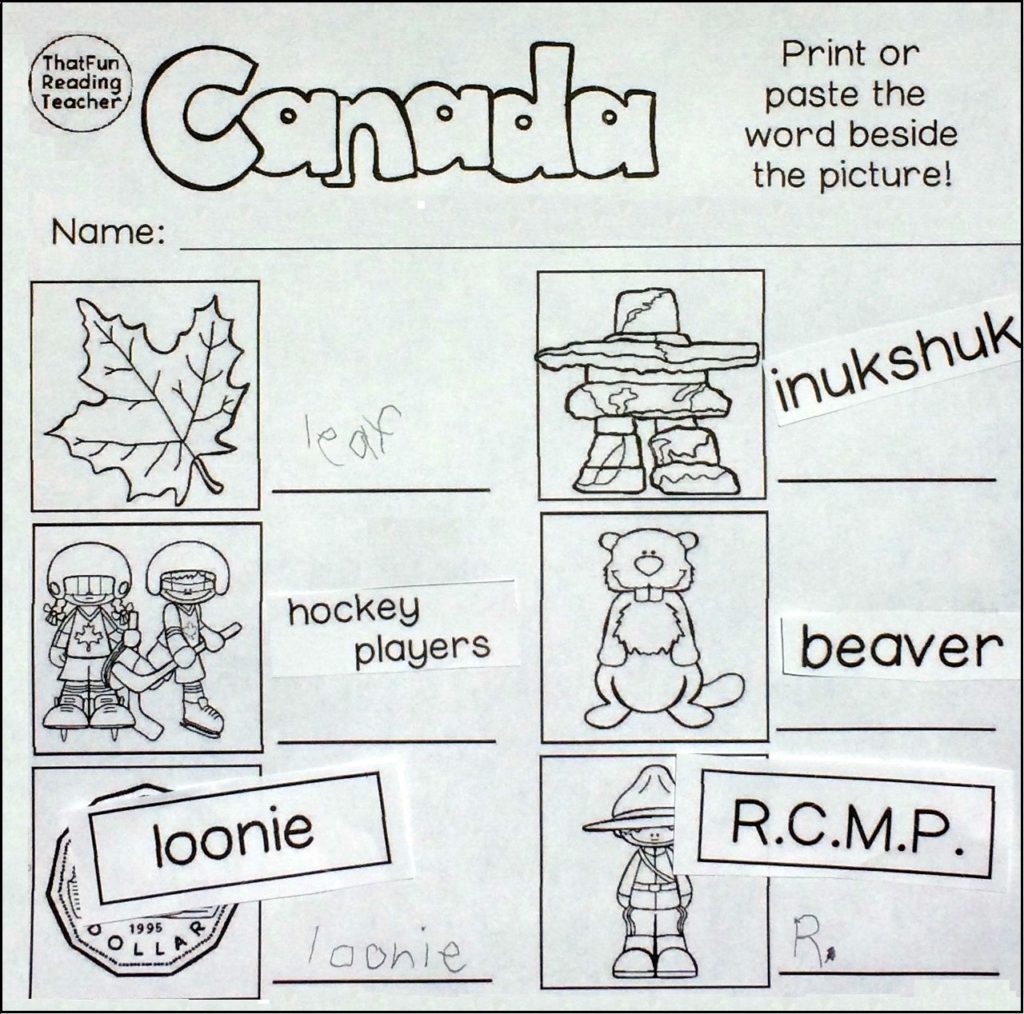
My students enjoy 'fun worksheets' every so often. The literacy skills practice pages that are included so far are pictured below:

Canada Read and Write and More - syllables Canada Read and Write and More - read and colour

3 Canada Print or Paste

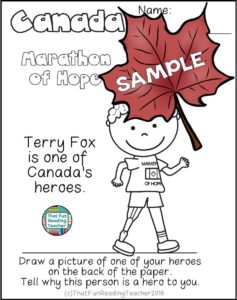
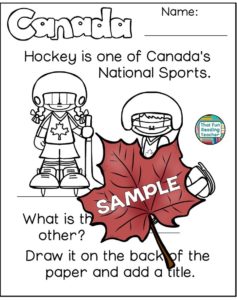
Bonus Terry Fox and hockey colouring fact sheets for those early finishers!

Canada Day Read and Write and More - Terry Fox sample Canada Day Read and Write and More - hockey sample

I will leave you with this freebie and links to money-saving bundles that include Canada Read and Write and More! Best wishes to all of you as you finish the school year, and Happy Canada Day! 2015 TpT Store Prof pic circle
https://www.teacherspayteachers.com/Product/Canada-Bundle-Kindergarten-and-Primary-2482581 Th1 Canada 2pk

P.S. Here's a little 'Aha' moment from a pre-Canada Day conversation in my classroom about 19 years ago...no figurative language in kindergarten!

That Fun Reading Teacher's #AhaMoment on why not to use figurative language with #kindergarten students

Related:

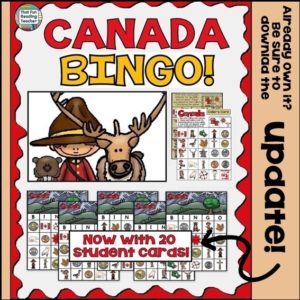
                    Canada BINGO by That Fun Reading Teacher
Fun ideas for elementary students to learn about and celebrate Canada sq

Saturday, June 11, 2016

LANGUAGE ARTS - "Scooping Words with One Closed Syllable & One Vowel-Consonant-e Syllable"

by Reading on Strawberry Lane 

Grades 1-3


Scooping a word is the same as dividing the word into syllables. Syllables can be divided by saying them orally or by using a pencil and paper. If we orally divide a word into syllables, we usually clap the word out. For example, if we orally divided the syllables of dislike, we would clap out ‘dis’ and ‘like,’ and that would be two claps. If we divided the syllables on paper, we would place a slash between the ‘s’ and ‘l’ in the word ‘dis/like.’

So rather that placing a slash, there is another way to show the number of syllables in a word, and that is to scoop the syllables. This is how that would look: d i s I I k e. Not dividing the word with a slash avoids the look of an extra letter in the word, and it also avoids the idea of students thinking the word has only one syllable since there is just one slash. With the idea of scooping with the finger or with a pencil, students can feel and see the scoops which in turn matches the number of syllables.

This packet contains 64 task cards that allow students to practice scooping words with one closed syllable and one vowel-consonant-e syllable.

Saturday, June 4, 2016

LANGUAGE ARTS - "Scooping Words With One Closed Syllable & One Vowel-Consonant-e Syllable"

by Reading on Strawberry Lane (Amanda Trump)

Grades 1-3


Scooping a word is the same as dividing the word into syllables. Syllables can be divided by saying them orally or by using a pencil and paper. If we orally divide a word into syllables, we usually clap the word out. For example, if we orally divided the syllables of dislike, we would clap out ‘dis’ and ‘like,’ and that would be two claps. If we divided the syllables on paper, we would place a slash between the ‘s’ and ‘l’ in the word ‘dis/like.’

So rather that placing a slash, there is another way to show the number of syllables in a word, and that is to scoop the syllables. This is how that would look: d i s I I k e. Not dividing the word with a slash avoids the look of an extra letter in the word, and it also avoids the idea of students thinking the word has only one syllable since there is just one slash. With the idea of scooping with the finger or with a pencil, students can feel and see the scoops which in turn matches the number of syllables.

This packet contains 64 task cards that allow students to practice scooping words with one closed syllable and one vowel-consonant-e syllable.

Thursday, May 26, 2016

LANGUAGE ARTS - "Scooping Words With One Closed Syllable & One Vowel-Consonant-e Syllable"

by Reading on Strawberry Lane (Amanda Trump)

Grades 1-3


Scooping a word is the same as dividing the word into syllables. Syllables can be divided by saying them orally or by using a pencil and paper. If we orally divide a word into syllables, we usually clap the word out. For example, if we orally divided the syllables of dislike, we would clap out ‘dis’ and ‘like,’ and that would be two claps. If we divided the syllables on paper, we would place a slash between the ‘s’ and ‘l’ in the word ‘dis/like.’

So rather that placing a slash, there is another way to show the number of syllables in a word, and that is to scoop the syllables. This is how that would look: d i s I I k e. Not dividing the word with a slash avoids the look of an extra letter in the word, and it also avoids the idea of students thinking the word has only one syllable since there is just one slash. With the idea of scooping with the finger or with a pencil, students can feel and see the scoops which in turn matches the number of syllables.

This packet contains 64 task cards that allow students to practice scooping words with one closed syllable and one vowel-consonant-e syllable.

Wednesday, May 18, 2016

LANGUAGE ARTS - "Scooping Words With One Closed Syllable & One Vowel-Consonant-e Syllable"

by Reading on Strawberry Lane (Amanda Trump)

Grades 1-3


Scooping a word is the same as dividing the word into syllables. Syllables can be divided by saying them orally or by using a pencil and paper. If we orally divide a word into syllables, we usually clap the word out. For example, if we orally divided the syllables of dislike, we would clap out ‘dis’ and ‘like,’ and that would be two claps. If we divided the syllables on paper, we would place a slash between the ‘s’ and ‘l’ in the word ‘dis/like.’

So rather that placing a slash, there is another way to show the number of syllables in a word, and that is to scoop the syllables. This is how that would look: d i s I I k e. Not dividing the word with a slash avoids the look of an extra letter in the word, and it also avoids the idea of students thinking the word has only one syllable since there is just one slash. With the idea of scooping with the finger or with a pencil, students can feel and see the scoops which in turn matches the number of syllables.

This packet contains 64 task cards that allow students to practice scooping words with one closed syllable and one vowel-consonant-e syllable.

Saturday, April 23, 2016

LANGUAGE ARTS - "Scooping Words With One Closed Syllable & One Vowel-Consonant-e Syllable"

by Reading on Strawberry Lane 

Grades 1-3


Scooping a word is the same as dividing the word into syllables. Syllables can be divided by saying them orally or by using a pencil and paper. If we orally divide a word into syllables, we usually clap the word out. For example, if we orally divided the syllables of dislike, we would clap out ‘dis’ and ‘like,’ and that would be two claps. If we divided the syllables on paper, we would place a slash between the ‘s’ and ‘l’ in the word ‘dis/like.’

So rather that placing a slash, there is another way to show the number of syllables in a word, and that is to scoop the syllables. This is how that would look: d i s I I k e. Not dividing the word with a slash avoids the look of an extra letter in the word, and it also avoids the idea of students thinking the word has only one syllable since there is just one slash. With the idea of scooping with the finger or with a pencil, students can feel and see the scoops which in turn matches the number of syllables.

This packet contains 64 task cards that allow students to practice scooping words with one closed syllable and one vowel-consonant-e syllable.

Saturday, April 16, 2016

LANGUAGE ARTS - "Scooping Words With One Closed Syllable & One Vowel-Consonant-e Syllable"

by Reading on Strawberry Lane

Grades 1-3


Scooping a word is the same as dividing the word into syllables. Syllables can be divided by saying them orally or by using a pencil and paper. If we orally divide a word into syllables, we usually clap the word out. For example, if we orally divided the syllables of dislike, we would clap out ‘dis’ and ‘like,’ and that would be two claps. If we divided the syllables on paper, we would place a slash between the ‘s’ and ‘l’ in the word ‘dis/like.’

So rather that placing a slash, there is another way to show the number of syllables in a word, and that is to scoop the syllables. This is how that would look: d i s I I k e. Not dividing the word with a slash avoids the look of an extra letter in the word, and it also avoids the idea of students thinking the word has only one syllable since there is just one slash. With the idea of scooping with the finger or with a pencil, students can feel and see the scoops which in turn matches the number of syllables.

This packet contains 64 task cards that allow students to practice scooping words with one closed syllable and one vowel-consonant-e syllable.

Saturday, April 9, 2016

LANGUAGE ARTS - "Scooping Words With One Closed Syllable & One Vowel-Consonant-e Syllable"


by Reading on Strawberry Lane (Amanda Trump)

Grades 1-3


Scooping a word is the same as dividing the word into syllables. Syllables can be divided by saying them orally or by using a pencil and paper. If we orally divide a word into syllables, we usually clap the word out. For example, if we orally divided the syllables of dislike, we would clap out ‘dis’ and ‘like,’ and that would be two claps. If we divided the syllables on paper, we would place a slash between the ‘s’ and ‘l’ in the word ‘dis/like.’

So rather that placing a slash, there is another way to show the number of syllables in a word, and that is to scoop the syllables. This is how that would look: d i s I I k e. Not dividing the word with a slash avoids the look of an extra letter in the word, and it also avoids the idea of students thinking the word has only one syllable since there is just one slash. With the idea of scooping with the finger or with a pencil, students can feel and see the scoops which in turn matches the number of syllables.

This packet contains 64 task cards that allow students to practice scooping words with one closed syllable and one vowel-consonant-e syllable.